

Digital transformation has become one of those phrases that everyone nods at but few can show real returns from.
Nearly 89% of organizations are investing in digital and AI transformation, yet according to BCG, most capture less than a third of the expected value.
Here’s a truth most executives already know but rarely say out loud:
“Digital transformation isn’t broken because of technology.”
It is, in fact, broken because of a disconnection between strategy, execution, and most importantly people. This disconnect is one of the core reasons digital transformation fails in enterprises.
Why Most Digital Transformation Projects Underdeliver
Digital transformation often starts with ambition. We are talking about new platforms, automation, data strategies, and enterprise systems. Then something shifts. The clarity fades, and people quietly return to old systems.
When digital transformation strategy, people, and systems don’t move in sync, projects lose meaning. Leaders assume once the vision is set, teams will figure it out. But alignment doesn’t happen automatically. It’s built daily.
Here’s what we’ve seen across dozens of enterprise digital transformation initiatives.

Technology Doesn’t Transform Companies. People Do.
Real change begins before you introduce a new system. The strongest digital transformation programs we’ve studied have one thing in common: they treat users as part of the design process, not the audience.
When users see digital transformation as something being done to them, resistance grows. When they’re included in shaping it, digital adoption happens naturally. This is why many digital initiatives fail despite strong technology investments.

Why Digital Transformation Loses Momentum After Launch
A Pattern We See in Stalled Digital Transformation Projects
“Great digital plans rarely fail at launch; they fade during scaling.”
The first few months of any digital transformation usually feel exciting. Everyone’s aligned, and the sense of progress is strong. But after launch, momentum starts to slip quietly. What began as a top priority slowly becomes one project among many.
It usually happens like this:
- Month 1–3: Excitement, workshops, executive updates
- Month 4–8: Systems go live. Users start adapting
- Month 9–12: Engagement falls. Other priorities take over. Leaders shift focus
Most digital transformation efforts don’t fail overnight. They simply lose rhythm. Not because the strategy is wrong, but because progress stops feeling real.
People stop seeing the link between their work and business outcomes. Reports turn into checklists instead of impact stories. Leadership meetings become about project updates instead of digital transformation ROI.
Why Small, Visible Wins Keep Digital Transformation Alive
The fix isn’t more data or new dashboards. It’s about showing progress in a way that keeps people connected to purpose.
When teams see how their effort improves response time, customer experience, or cost efficiency, they stay motivated.
This is what we keep telling our clients:
“Digital transformation isn’t one big success moment. It’s a series of small wins that keep belief alive. Small, visible wins.”
The Missing Link in Digital Transformation: Business Value Visibility
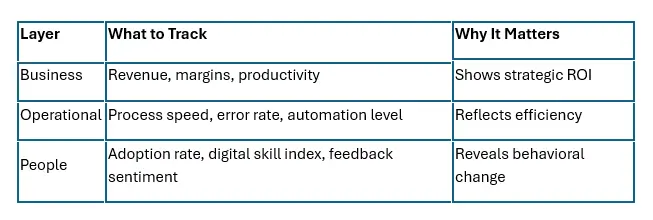
C-suite leaders often lack a single, live view of how digital transformation is performing. Without that visibility, strategy feels abstract, and teams drift.
This lack of business value visibility is one of the most overlooked digital transformation challenges. Without clear signals of impact, even strong strategies lose momentum.
Here’s a simple value-tracking framework that actually works.
How Leaders Bridge the Strategy Execution Gap
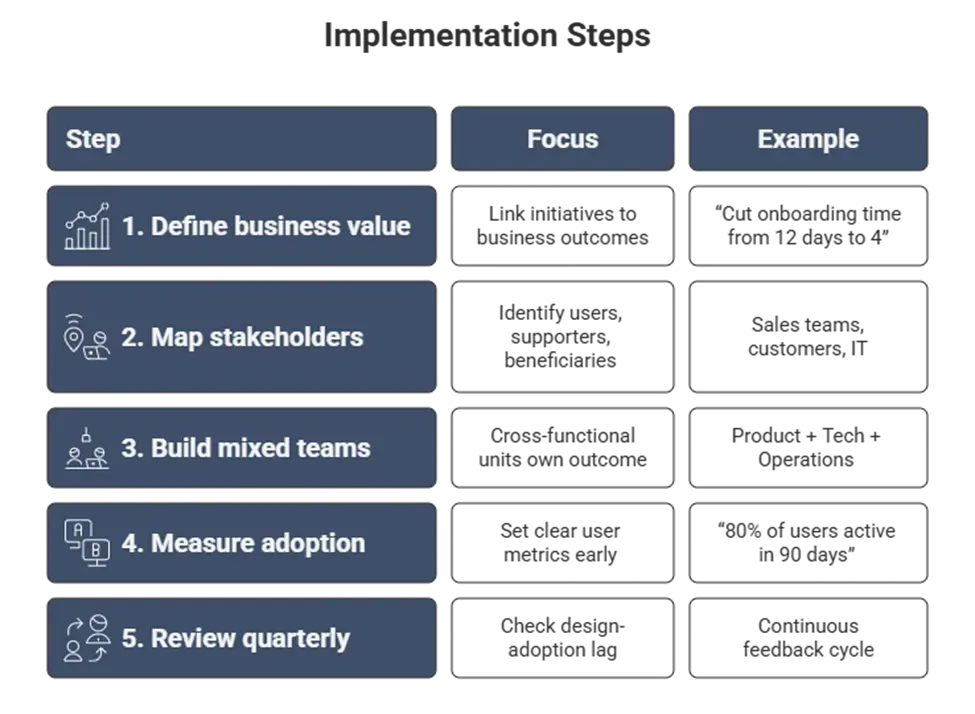
True digital transformation execution means three systems moving in sync:
- Business logic
- Human behavior
- Technology
When one lags, the others collapse. Aligning these three elements is essential to overcoming digital transformation failure.
Here’s a simple framework leaders can use.
Measuring Real Digital Transformation Impact
What gets measured shapes what gets managed. Track the numbers that reflect real change, not just delivery.
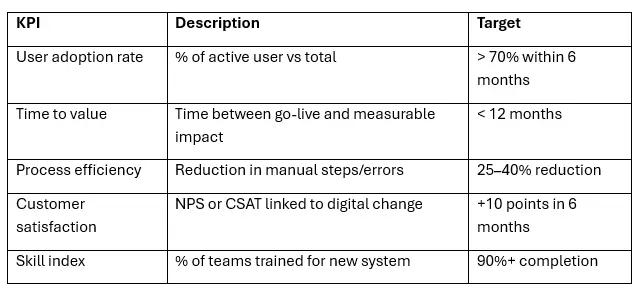
Focusing only on milestones and system launches hides whether digital transformation initiatives are actually improving how the business operates.
Before You Invest More in Technology, Ask This Question
If your digital transformation isn’t translating into visible change for your customers or teams, it’s time to rethink the starting point.
Before investing another dollar in technology, ask:
“Do my people understand the purpose, and do they feel part of it?”
How Airvon Helps Turn Strategy Into Measurable Impact
At Airvon, we’ve helped enterprises and startups design digital transformation strategies that deliver measurable impact on the bottom line by aligning people, execution, and technology from day one.
Conclusion
Digital transformation fails not because of weak technology, but because strategy, execution, and people fall out of sync. Sustainable change depends on user engagement, visible business value, and consistent momentum beyond launch. Leaders who focus on small wins and real impact keep transformation alive. Before investing more, ensure your people understan and believe in the purpose.
Why does digital transformation fail despite strong technology investments?
Digital transformation fails when strategy, execution, and people are misaligned, causing low adoption and loss of momentum.
What is the biggest reason digital transformation loses momentum after launch?
Momentum fades when teams stop seeing clear links between their work and business outcomes.
How does user engagement impact digital transformation success?
When users are involved in shaping solutions, adoption improves and resistance decreases.
What metrics should leaders track to measure digital transformation impact?
Key metrics include user adoption rate, time to value, process efficiency, and customer satisfaction.
How can leaders bridge the digital transformation strategy–execution gap?
By aligning business logic, human behavior, and technology while making business value visible at every stage.
