
As we entered 2026, it’s worth looking back at the key moments that defined AI in 2025.
1. The Emergence of Built-In Reasoning Capabilities
What seems standard now was once a major limitation. Early models struggled with basic logical thinking. There were widespread memes on X and Reddit about failures like confusing “9.9” and “9.11” in comparisons.
These shortcomings triggered a wave of startups creating add-on layers for “reasoning” and “in-depth analysis” over base models. Early standouts like Manus capitalized on this need.
Everything changed in January 2025 when DeepSeek integrated reasoning directly into its R1 model, setting a new industry standard. Add-on layers were no longer sufficient, reasoning had to be core to the architecture.
By year’s end, built-in reasoning became a baseline expectation. That shift led directly to the next phase, autonomous, agent-driven systems.

2. GenAI Went Mainstream
2025 marked the full integration of generative AI into everyday culture. Image creation reached a tipping point as advanced features in tools like ChatGPT flooded the internet with Ghibli-inspired visuals. Video generation quickly followed.

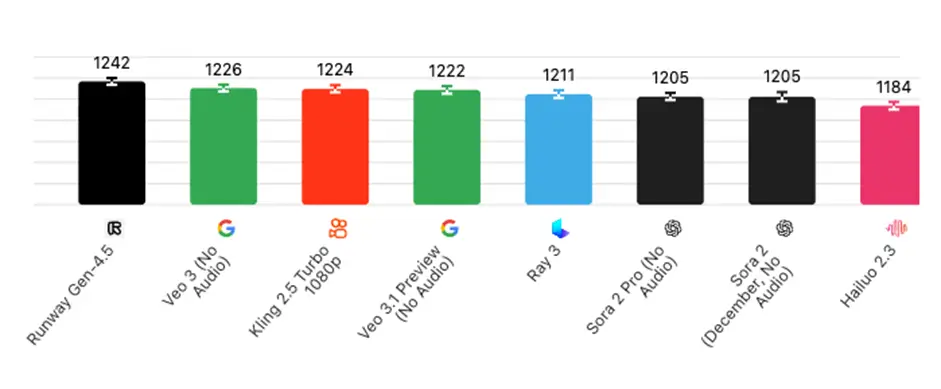
Google’s Veo3 raised expectations. Then came Sora 2, Runway 4.5, and a growing list of Chinese models. Benchmarks that once felt absurd, like the Will Smith spaghetti test, became irrelevant as text to video quality improved rapidly.
Quietly, Chinese video startups such as Kling, ByteDance’s Seedance, MiniMax (creator of Hailuo), and other open research labs emerged as serious competitors, matching U.S. systems at a fraction of the cost.
Alongside real progress came a flood of low-effort content, as the era of “AI slop” officially arrived.
3. The Shift to Agentic Systems
Large language models once operated in a simple query response loop. You asked a question, and they provided an answer. That was it. Agents marked a clear evolution.
These systems operate in loops, reasoning, acting, checking results, and retrying until goals are met. They use tools, access systems, and work autonomously across data.
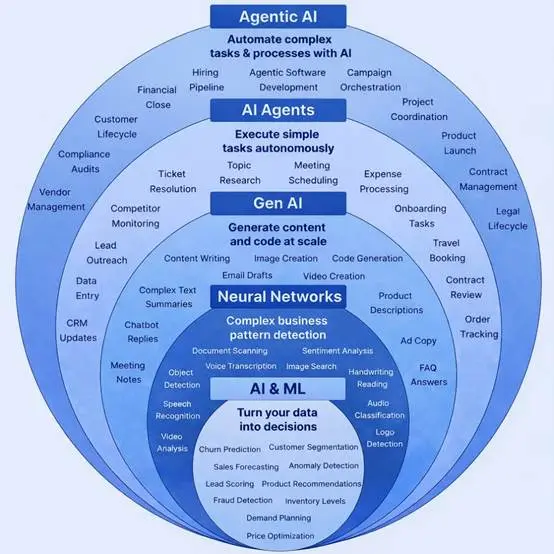
2025 was the year agents moved from demos to production:
- Agent-driven workflows began replacing brittle automation tools
- Tool-using models became standard
- Agentic browsers and research environments gained real traction
By late 2025, “agentic” was everywhere.
4. Datacenters, Power Demands, and the Critical AI Supply Chain
2025 made one reality unavoidable. AI is now a nation-state concern. Governments and corporations competed fiercely for:
- GPUs
- Chips
- Land
- Capital
- Energy
The U.S. pushed hard for domestic manufacturing, and major component makers shifted production accordingly. Hyperscalers invested billions into clean energy, with many AI companies backing their own power generation.
Memory and networking bottlenecks became acute. GPU and RAM shortages never fully disappeared.
In this transition, Google quietly emerged as one of the biggest winners, and the race is far from over.
5. Open-Weight Models Challenge Closed Proprietary Systems
Open-weight models punched well above expectations in 2025, often shaping the direction of the industry itself.
With only minor differences in output quality and major advantages in cost, privacy, and self-hosting, they became increasingly attractive to enterprises.
This mattered because once organizations realized they could run high-capability models:
- Privately
- On their own data
- At predictable costs
The edge held by closed systems diminished. The trend culminated in Nvidia finalizing its $20B acquisition of Groq, acknowledging the growing momentum behind alternative architectures.
6. China’s Push Toward Tech Independence
The gap between open-weight, largely Chinese, models and proprietary, largely U.S., systems carries real geopolitical weight.
This shift was reinforced by:
- Progress in domestic accelerators, including Huawei’s GPU efforts challenging Nvidia
- Advances aimed at breaking ASML’s dominance in sub-7nm chip production
- Aggressive pricing, with open-weight models available for free fine-tuning
- Lower energy, production, and inference costs
- Rapid scaling of local infrastructure, including chips from Huawei and models from Alibaba, Tencent, and DeepSeek
Chinese AI firms are positioning themselves to compete globally on both performance and economics. As seen before in EVs, drones, and consumer hardware, the real pressure may come from price.
7. AI at Work Finally Stabilized
Throughout 2025, reports showed steady AI use across routine functions. From content creation to search, advertising to ecommerce, AI embedded itself quietly into daily workflows.
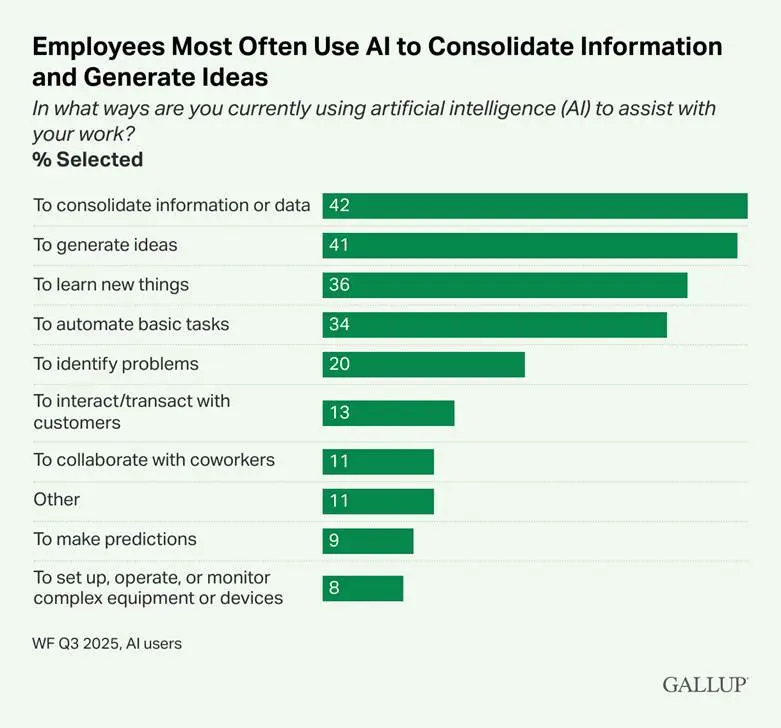
AI’s evolution in 2025 set the foundation for how businesses will build, compete, and scale in 2026 and beyond.
The organizations that win next will be the ones that understand these shifts early and act decisively.
If you’re looking to apply these changes in real workflows, explore our GenAI services to turn emerging capabilities into practical, measurable outcomes.
Conclusion
The AI shifts of 2025 marked a move from experimentation to infrastructure, autonomy, and scale.
Built-in reasoning, agentic systems, and open models reset expectations across industries. Geopolitics, supply chains, and cost structures now shape innovation as much as model quality. The teams that act on these shifts early will define how AI is applied in 2026 and beyond.
What were the most important AI shifts in 2025?
Key shifts included built-in reasoning, agentic systems entering production, open-weight models gaining traction, and rising infrastructure constraints.
Why did built-in reasoning become a baseline for AI models?
Add-on reasoning layers proved unreliable, pushing model providers to integrate reasoning directly into core architectures.
How did agentic systems change AI use in 2025?
Agents moved beyond demos to handle multi-step workflows using tools, retries, and autonomous decision loops.
Why did open-weight AI models gain enterprise adoption?
They offered competitive performance with advantages in cost, privacy, and predictable deployment.
What do the AI shifts of 2025 mean for 2026?
They set the foundation for scalable, production-ready AI, with success driven by execution, economics, and infrastructure readiness.
