
Automate up to 90% of the routine work to allow your teams to concentrate on high value tasks.

Our AI agent development services enables companies to accelerate execution by 40-50% and cut labor expenses by 40%+, as well as gain 30-45 percent productivity improvement in customer workflows.

Custom AI Agent Development Services

Our customised AI agents are designed and constructed to fit your particular business operations, information systems, and business objectives. In case you require a task-oriented agent or a complete autonomous system, every solution is designed to be accurate, reliable, and scalable.

Enterprise AI Agent Development Services

Our enterprise AI agent development services support complex, large-scale deployments. We build agents with governance, security, and performance controls to ensure consistent behavior across departments, systems, and high-volume workflows.

AI Agent Strategy & Use Case Consulting

We help you identify where AI agents create the most value. We validate high-impact use cases via discovery workshops, feasibility analysis, and ROI modeling and develop them in the least amount of time with reduced riskiness.

AI-Powered & GenAI Agent Development

Our AI-powered and GenAI agent development services leverage large language models (LLMs) and enterprise knowledge to create agents capable of reasoning, planning, and executing complex tasks with minimal human intervention.

AI Agent Integration & Workflow Automation

We add AI agents to your existing systems, CRMs, ERPs, data platforms, APIs, and internal tools and allow smooth end-to-end workflow automation and real-time decision support.

Multi-Agent System Development

For advanced use cases, we develop multi-agent systems where multiple AI agents collaborate, coordinate tasks, and adapt dynamically, ideal for operations, analytics, and enterprise automation scenarios.

AI Agent Deployment, Monitoring & Optimization

We make your agents production-ready by testing them carefully, deploying them safely, and monitoring them, as well as optimizing them, maintaining the performance, accuracy, and reliability as your business grows.

Types of AI Agents We Build

We create AI agents that are based on your workflows, data, and scale, whether they are focused on single specific agents or broad multi-agent systems developed to operate in real production settings.

Single-Agent AI Solutions

Our single AI agents are created to deal with high-impact tasks within well-defined workflows. Such agents are speed-oriented, accurate and consistent, and they are worth considering when one wants to automate some of the routine work without introducing additional complexity.

Common single-agent use cases include:

  • Customer support automation
  • Internal knowledge assistance
  • Data processing and reporting
  • Task execution across connected tools

Every single-agent solution is designed to be compatible with your current systems today, providing quick solutions and being scalable to the requirements as needed.

Multi-Agent Systems

For more complex operations, we build multi-agent systems where multiple AI agents collaborate, share context, and coordinate actions across workflows. These models are designed for organizations looking to scale automation across teams, functions, and systems. Multi-agent systems can:
  • Manage end-to-end business processes
  • Coordinate work across departments and platforms
  • Adapt dynamically to changing inputs and conditions
  • Scale automation without increasing operational risk
By combining AI-powered agents with enterprise-grade architecture, we enable intelligent, system-wide execution, moving beyond isolated automation toward coordinated, scalable AI operations.

What Sets Our AI Agents Apart

We develop our AI agents to operate in the production grade setting, with highly-developed agent systems, state-of-the-art LLM coordination, and operational controls. Our agents are agents of thought, action, combination, and expansion that are reliable within actual business systems.

Autonomous Decision-Making with Guardrails

Our AI agents use goal-based planning, self-prompting, and rule-based constraints, to make independent decisions. All the agents work within specified policies so all actions are consistent with the business logic, security, and compliance standards.

Advanced Tool & Skills Orchestration

We provide access to structured tools and skill libraries to AI agents so that they can invoke API, query databases, invoke workflows, and programs. This enables agents to get beyond talking and conducting actual operational work.

Multi-Agent Architecture & Orchestration

Our design of scalable multi-agent systems involves agents cooperating by hierarchical, sequential, or peer-to-peer designs. These architectures promote delegation of tasks, shared memory, coordination and conflict resolution of complex workflows.

Context-Aware Data Integration

Our AI agents are built with persistent and dynamic memory, retrieval-augmented generation (RAG), and secure data connectors. This ensures agents operate with full context across structured and unstructured enterprise data sources.

Human-in-the-Loop & Escalation Logic

We implement explicit human–agent handoff mechanisms, including approvals, confidence thresholds, and escalation paths. This allows agents to operate autonomously while involving humans when judgment, validation, or exception handling is required.

Optimized LLM Inference & Model Management

We control the utilization of LLM by means of prompt engineering, caching, routing and fall-back mechanisms over GPT, Gemini, and Mistral models. This assures consistency, productivity and containment of costs in the production setting.

Monitoring, Governance & Observability

All AI agents contain logging, tracing, performance monitoring as well as auditability. These controls present an insight into agent behavior, decisions and results, which are useful in compliance, debugging, and continuous improvement.

Production-Ready by Design

We have designed our AI agents in a manner that they are scalable, fail to crash and are maintainable to provide an unchanging performance with increased usage and changes in business requirements.

Reasons Teams Get Stuck with AI Agents

Teams often slow down with AI automation not because the technology falls short, but because adoption outpaces preparation. Without clear use cases, aligned processes, and operational readiness, early momentum fades as complexity increases.

Weak outcome alignment

AI agent initiatives often begin as experiments instead of outcome-driven programs. Without measurable targets, pilots rarely translate into business value.

Limited system context

Agents struggle when data and tools don’t connect smoothly. Missing context leads to inconsistent decisions and automation that can’t scale.

Poor workflow fit

Generic agent tools are built for demos, not your processes. When they don’t match real workflows, adoption slows, and ROI stays limited.

Unclear controls and oversight

Organizations hesitate to scale agents without guardrails. They need visibility, traceability, and clear boundaries for safe autonomy.

Undefined human–agent handoffs

Agents create the most value when they work with people. Without clear roles and escalation paths, productivity gains break down.

Build AI agents that work in real business environments.

Airvon delivers secure, scalable AI agent solutions designed for production, not just pilots.
Let’s explore what’s possible.

Use Cases by Function

AI Agents can take over repetitive, high-cognitive tasks across business functions, freeing teams to focus on creativity, strategy, and impact.

Get a free AI Agent trial in under 7-days along with an ROI analysis report.

Get a free AI Agent

Value Delivered

AI Agents don’t just automate tasks — they elevate how teams operate, collaborate, and make decisions.
Here’s what leading organizations are achieving today.

45%

Boost in Productivity

AI Agents streamline workflows, reduce manual effort, and free teams to focus on strategic initiatives instead of repetitive work.

30–50%

Reduction in Operational Costs

By automating complex, multi-step processes across departments, businesses see measurable efficiency gains and faster turnaround times.

60%

Faster Response Times

Agents handle customer and internal queries instantly, ensuring faster resolutions and improved satisfaction rates.

35%

Higher Revenue per Employee

With automation covering the routine, employees deliver more high-impact outcomes — improving overall business performance.

70%

Fewer Human Errors

Data entry, reporting, and process handoffs are executed with consistent accuracy and reliability.

24/7

Service Continuity

Agents never sleep — ensuring global operations, customer support, and business-critical functions stay active round the clock.

Helping Businesses Like Yours Succeed

How We Build & Deploy AI Agents

We combine strategy, design, and engineering to deliver agents that fit seamlessly into your ecosystem, not just as tools, but as active team members that scale with your business.
Up-to-Date Technology

We are a full-stack development company with deep knowledge across a wide range of technologies, ensuring we select the optimal tech stack for your specific needs. 
Let's map out a journey of success

Get in touch with our industry experts to discuss your vision and figure out a potential.

Ellipse 1

Caroline Aumeran

Senior Project Manager at Airvon

Frequently Ask Question

What is the difference between an AI Agent and an automation script?

An automation script follows strict, predefined steps. An AI Agent has autonomy and reasoning; it can understand an overarching goal, decide which tools to use, and adjust its plan based on the results it gets.

AI Agents are designed to connect to your current systems (CRM, ERP, ticketing tools) through APIs or integration layers. This lets them perform actions like updating a customer record or submitting an invoice.
A strong AI Agent needs a powerful Large Language Model (LLM) for reasoning, a set of external tools it can use for actions, a memory to hold context, and a planning component to map out its action sequence.

Yes. An agent can receive a complex request (e.g., “Change my service plan and refund the last charge”), check the customer’s eligibility in the CRM, calculate the refund amount, and submit the ticket for final payment approval.

We implement strict guardrails and approval steps. For high-risk actions (like sending money), we set up a “human-in-the-loop” review, where the agent suggests the action but requires a staff member’s final sign-off.

We recommend a Pilot Program or a Minimum Viable Agent (MVA). This focuses the agent on a high-value, contained process (like triaging 20% of your support tickets) to quickly demonstrate ROI and gather necessary data before scaling up.

Business Insights

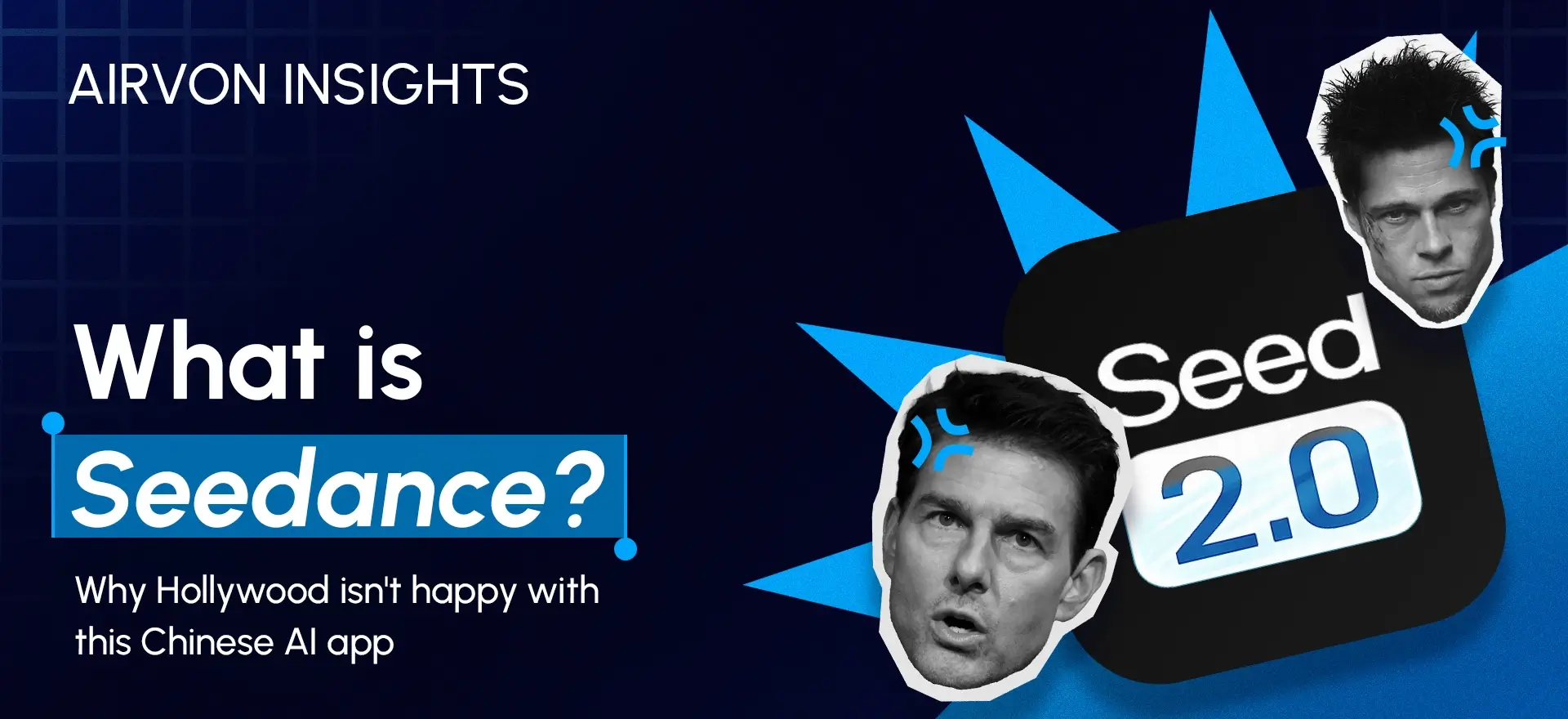
Seedance 2.0: The Chinese AI Video Tool That Has Hollywood on Edge

Tom Cruise and Brad Pitt trading punches on a rubble-strewn

Seedance 2.0 AI video generator displayed on phone with China flag

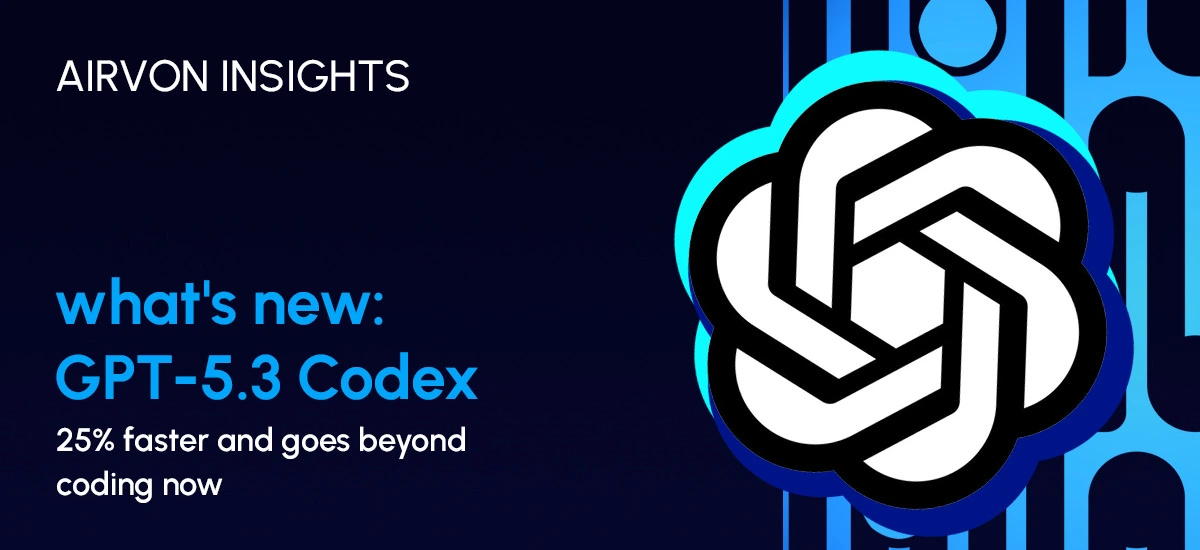
GPT-5.3-Codex Is 25% Faster and No Longer Just a Coding Tool

OpenAI has released GPT-5.3-Codex, describing it as its most capable

Graphic announcing GPT-5.3 Codex, 25% faster and beyond coding

OpenAI Starts Testing Ads in ChatGPT

If you’ve been using ChatGPT lately and noticed a sponsored

OpenAI starts testing ads in ChatGPT announcement banner showing sponsored ad examples inside the ChatGPT interface.

What OpenAI Frontier Means for Enterprise AI, SaaS, and the Future of Software

This past week, OpenAI introduced OpenAI Frontier, a new platform

OpenAI Frontier explained banner with OpenAI logo